Showing posts with label Bob Dylan. Show all posts

Thursday, 24 January 2013

The Bootleg Series Volume 4- Bob Dylan Live 1966


Often referred to as "The Royal Albert Hall Concert" this live bootleg had a mythical status surrounding it, I remember when I was heavily into the Band I looked for as much footage and recordings from that tour as I could find. I was completely mesmerised by what little I saw, the sound was brutal, raw rock and roll at it's finest, unlike anything people had heard at that time. It's an important musical document in the history of Dylan's musical career because that tour signalled the end of Dylan as the folk troubadour and the supposed poet of his generation. Dylan had made the decision to expand and explore musically, to embrace the music that inspired him growing up. Even though it seemed Dylan was now offering no compromise on his journey he did divide each show into two segments, the first was Dylan in acoustic mode, perhaps a farewell to his past, before bringing The Hawks out for the second electric set. It's pretty well documented that as soon as the band showed up the audience went into uproar and a cacaphony of boos and slow handclapping ensued. Dylan seemingly unperturbed and quite possibly stoned out out of his mind ploughed onwards leaving a bewildered and upset audience in his wake. Dylan was deeply revered in the U.K he was seen as the voice of a generation, no other artists matched him so his change musically seemed to reverberate the loudest in the U.K and Europe.

I always tended to listen to the second disc which was the electric side, but in wanting to review this I went and listened a few times to disc one. I think there was a tendency to assume that Dylan was bored with performing his old material in an acoustic setting but it doesn't come across in his performance. She Belongs To Me from the Bringing It All Back Album has that beautiful line

She's got everything she needs,
She's an artist she don't look back.

Listening to him in this setting everything stands out clear, the lyrics feel more evocative and profound because there is no distraction. Visions of Johanna appeared on the Blonde on Blonde album and it continued to expand on Dylan's songwriting style, it seemed that often he was the protagonist but was telling the story as someone watching through a window.

Ain't it just like the night, to play tricks on you when you're trying to be so quiet,
We sit here stranded, though we are all doing our best to deny it
And Louise holds a handful of rain, tempting you to defy it,
Lights flicker from the opposite loft,
In this room the heating pipes they just cough
The country music station plays soft
But there's nothing really to turn off
Just Louise and her lover so entwined
And these visions of Johanna that conquer my mind.

Dylan's backing band The Hawks were a veteran bar band from Toronto who had originally formed as a backing unit for rockabilly singer Ronnie Hawkins, the original lineup featured drummer Levon Helm who hailed from Arkansas, guitarist Robbie Robertson, Rick Danko on bass, Richard Manuel on piano and Garth Hudson on the organ. Helm left the group early into the U.S leg of the tour and when they reached Europe Mickey Jones who had played with Trini Lopez was in the drum stool. When the band came on stage the audience wasn't prepared for the sheer volume and power of the music that was about to begin. Dylan fires off Tell Me Momma, what you immediately sense is a band that knows how to weave a tight groove, the drums are loud and Jones keeps that groove locked in, he has a very ham fisted style, he doesn't possess the looseness that Levon Helm provided. Rick Danko perhaps uncertain playing with a new drummer provided that lock in role, the bass is pounding but there aren't many fluid runs. The person who shines is Garth Hudson who weaves this sound that floats across each song. Robbie too provides some incisive cutting guitar fills, blues and biting rock and roll all meshed together. Robbie and Garth really bounce off each other, with Robbie playing the down and dirty guitar slinger while Garth brings the music to another more exalted plain.

On I Don't Believe You Dylan begins by announcing the obvious, "it used to go like that, but now it goes like this", taunting the audience that everything is now on his terms. Baby Let Me Follow You Down is incredible just bass drum and bass solidly leading into the opening, Dylan leering "Baby let me Follow You Down" before Robbie sets of his incendiary flames, Garth not to be outdone responds by releasing a billowing cloud of notes. All the while Mickey Jones is crashing symbols and sending out thunderous sounds from his toms. Just like Toms Thumbs Blues and Ballad of a Thin Man give Dylan the chance to realise his studio creations live on stage. There is a rough hewn sound coming from the band, ballsy rock and roll delivered to a crowd of folk enthusiasts! The mournful One Too Many Mornings has some nice soulful backing vocals from Rick Danko. Dylan finally puts the audience out of it's misery with a shambolic version of Like A Rolling Stone, but not before someone in the audience has yelled out Judas, Dylan sneers "I don't believe you" he then turns to the band and states "playing fucking loud"! What a brilliant way to end the show! There were more shows before returning to the states and just before more U.S dates were about to begin Dylan had a motorcyle accident. There is a film of the tour the infamous Eat The Document which has some great live footage but also offers some insight into how far Dylan was burning the candle at both ends.



Monday, 14 January 2013

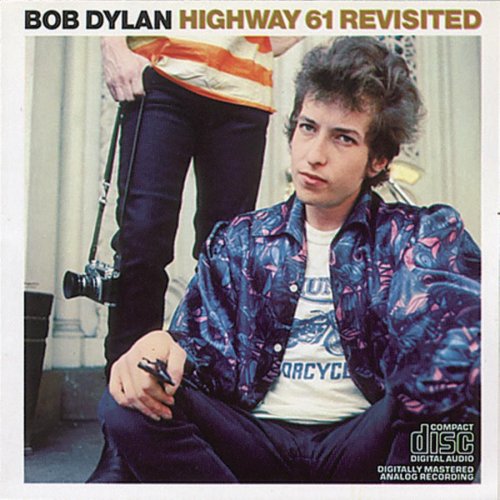
Highway 61 Revisited- Bob Dylan


In 1965 Bob Dylan in an apt way had reached a crossroads, he was disillusioned with his career, frustrated at fans and the music establishment who tried to frame him as an idol of the folk movement. Dylan himself wanted to embrace something different, step out from under the folk spotlight and take his music further on up the road. That road being Highway 61 which led from his home in Duluth Minnesota all the way down to the Mississippi Delta, the road of the country blues. Highway 61 Revisited pushed the boundaries of popular music, lyrically it saw Dylan continue to develop his writing style, poetic and surreal in it's images and depiction of American society and the characters that inhabited it. I don't think there was an album at that time that had such a deep cynicism and sarcasm to it, Dylan seemed to be venting his frustration as he had been doing on his earlier albums but with a unique flow of the pen. Dylan creates these vignettes with almost visual delight, tales that feature biblical characters and hustlers, people living on the edge and icons of history and popular culture.

Musically Dylan embraced the blues, with a raw and raucous quality with musicians who shared his passion and helped to create his vision. The initial recording sessions began in June 1965 at Columbia studios in Manhattan, Dylan bought in guitarist Mike Bloomfield from the Paul Butterfield Blues Band, Bobby Gregg was on drums, Paul Griffin was on piano and Harvey Brooks on bass.The first song recorded for the session was the rolling country blues styled It Takes A Lot To Laugh, It Takes A Train To Cry with some funky barrelhouse piano from Paul Griffin. Dylan is every bit the weary traveller on this song,

Well I ride on a mail train baby,
Can't buy a thrill
Well I've been up all night baby
Leanin on the window sill
Well if I die
On top of the hill
And if I don't make it
You know my baby will.

He is a brakeman on double E travelling down to the see until the winter comes. Dylan was deeply connected to country blues where tales of travelling on trains, changing seasons and colourful characters were embedded in the songs, this style became somewhat of a fertile building block for Dylan's writing.

The immortal Like a Rolling Stone was recorded the following day with Joe Macho jnr on bass, also at the session and initially not scheduled to play was Al Kooper who snuck into the studio to play guitar only to retreat once he heard Mike Bloomfield! He then went back into the studio and headed to the organ an instrument he had not played a lot of, his opening riff would become a dominant part of the song. Dylan leers

How does it feel?
To be on your own
With no direction at home
Like a complete unknown
Like a Rolling Stones

The sheer contempt and sarcasm Dylan elicits I don't think had ever been captured on record before, it's a brilliant song because of this, it's also a great pop song because musically it captures the spirit of rock and roll in it's defiance, it captures the emotion of the blues and marries to a pop sensibility that has this flowing organ sound and subtle blues picking from Bloomfield plus that crisp 4/4 beat from Bobby Gregg. Following this session Dylan moved up to Woodstock for a month to complete writing the album, he also showcased his new sound at the Newport Folk Festival to a wail of boos and cries of sell out. It's possible that this galvanised Dylan in his approach, it seemed that Highway 61 Revisited was also a middle finger to those who tried to corner Dylan, from the folk music establishment who cried accusations of populism.

From a Buick 6 is a driving rhythm and blues number the interplay between Kooper and Bloomfield is a highlight, Dylan once again excels with his wordplay,

Well, she don't make me nervous, she don't talk too much
She walks like Bo Diddley, and she don't need no crutch,
She keeps this four ten all loaded with lead
Well, you know if I go down dyin, she bound to put a blanket on my head.

The sombre Ballad of a Thin Man is Dylan at his most frustrated, it's a scathing critique on the people who tried to understand Dylan and his music, yet they continually overlooked the artists desire for creative freedom. The music press at the time seemed to constantly miss the point and be out of step with what was happening in music. There was this constant stream off commentary about Dylan selling out, the fire was stoked by the music press it was totally irrelevant. Dylan continued on his musical journey which had started more in traditional rock and roll and the blues than folk music.  Ballad of a Thin Man has the immortal line,

Because something is happening, 
but you don't know what it is,
Do you Mr Jones?

Tombstone Blues is a gritty number full of historical references and surreal lyrics set to the tone of raw garage rock and roll with some slashing lead runs from Bloomfield,the song has an amazing flow of lyrics,

The sweet pretty things are in bed now of course,
The city fathers they are trying to endorse
The reincarnation of Paul Revere's horse
But the town has no need to be nervous

Highway 61 Revisited is an apocalyptic gem, full of wit and sarcasm and all located on the blues highway, Highway 61. It's the place where Dylan absorbed his influences both musically and lyrically, there is a visual image of the Highway on fire with desultory characters coming in and out. For me it's the song that encapsulates the change Dylan was undergoing, to hear it in 1965 must have been quite a significant moment, because no song like that had been heard on the airwaves before, it was anarchic. Musically it captures that sense that all hell as broken loose, with a maniacal whistle to start the song and twisted slide notes that permeate through the song.

God said to Abraham, kill me a son,
Abe says Man you must be putting me on
God says No, Abe says what?
God says Abe you can do what you want, but
Next time you see me you better run
Well, Abe says where do you want this killing done?
God says Out on Highway 61.

I don't think there could be a fitting end to the album than Desolation Row, the album in general has reflected chaos and despair, Desolation Row finishes it off by offering a song cloaked in tired resignation, offering no hope of redemption, it creates a feeling of being on the edge of darkness. Dylan creates a weary well worn vocal for the song against the delicate acoustic backdrop created by famed Nashville session musician Charlie McCoy. McCoy happened to be in New York to visit producer Bob Johnston and in turn was invited to participate on the session. At the initial recording session Harvey Brooks supplied the bass but in the version released on the album the bass is played by Russ Savakus. When Dylan decided to tour the album with an electric band towards the latter half on 1965 he chose Levon and The Hawks who had previously been the backing group for Toronto based rockabilly singer Ronnie Hawkins. There is some great live material that has circulated over the years of some of these concerts that went on into the middle of 1966.


Friday, 23 November 2012

The Basement Tapes- Bob Dylan & The Band


I've just started reading Greil Marcus' Old Weird America which focuses on the recordings made by Bob Dylan and The Band after they regrouped in Woodstock in the wake of Dylan's motorcycle accident. A short history is required, Dylan had embarked on a world tour towards the end of 1965 with an electric backing band The Hawks who had previously played with rockabilly singer Ronnie Hawkins before striking out on their own towards the end of 1963, (previous blogs explain the history in greater depth). The tour was a landmark in rock music, it was loud brash and rooted in the blues and then married to the surrealism of Dylan and then set against the backdrop of an angry audience who only wished to be soothed, not blown through the hall walls! Dylan was going at a cracking pace and burn out was on the cards, after his accident he repaired to Woodstock to recuperate and the Hawks drifted up there themselves. They rented a house in West Saugerties that was dubbed Big Pink and Dylan would join the band in the basement to jam on songs. These songs found the light of day on the bootleg the Great White Wonder, the offical release didn't take place until 1975 and it only really touched the surface of what had been put on tape. What did get on to tape was amazing, especially for the time. Where rock and popular music were heading towards more grandiose pastures Dylan and the band were more interested in exploring the beautiful quilt of traditional country music and the lost art of story telling. There was also a sense of nostalgia and a desire to return to a time that was more innocent and less divided, this music was the soundtrack to that feeling of uncertainty but faith in some of the more precious ideals of the past. I have a two disc cd release and on it you can hear some hints at the directions each artist would take in the following 18 months.

Odd and Ends that kicks off the album doesn't show any changes, it's fast loud and bluesy with those familiar Robbie Robertson guitar lines, jagged and raw. Richard for the most part takes on the drums with Levon Helm yet to return to the fold. Orange Juice Blues has Richard on vocals, he has this incredible ability to tell a story and be totally convincing in doing so. It's plain to see that the Band have now completely left their blues/soul only sensibilities behind and are experimenting more with their voices and their instrumental range. Katie's Been Gone is beautiful with that Richard aching and pleading with Rick Danko duetting in the chorus, the Band had now found their voices. Richard was a great songwriter he was able to capture raw emotion and angst in a way Robbie Robertson never could. On each verse you can hear his growing desperation as to the location of his beloved Katie. I'm surprised why this one didn't make Music From Big Pink, Garth is in fine form with his swirling Lowery.

On Goin To Acupulco we get that first glimpse of a change of direction from Dylan, his voice was changing and becoming more expressive, the song is slow and mournful and has some soulful harmonies from the Band. Dylan still retains his humour and his surreal lyrical style on songs like Lo and Behold, each song has the feeling of a lone drifter travelling from town to town having all manner of adventures. The Band take up on Bessie Smith with Garth starting things off in mournful style, Rick has the lead but Richards duets on falsetto that sits below Rick's lead, they were on the verge of finding that sound, in fact they had it and when Levon rejoined his voice was the missing piece, and his drumming. Clothes Line Saga has that Luke The Drifter feel, maybe Dylan was going for something in that vein but with a different sense of depth.

Side two starts with Too Much Of Nothing a song widely covered when it was bootlegged, it's a got a slow dirge like quality with Robbie's guitar having that familiar jagged sound, but it's been warped and slowed down and bent to give it a deeper richer hue. Ain't No More Cane features Levon Helm and the blending of the three voices, Garth provides an emphatic accordion accompaniment. Levon is at home as the story teller, with that wonderful southern drawl. I think Robbie sneaks in a line on the song as well, I always thought he was an underrated vocalist. Crash on the Levee is a brilliant duet between a scathing apocalyptic Dylan and the brimstone fire of Garth Hudson. Garth has to stand as one of the most amazing musicians of a generation, his genius touched everything he played on. The call and response between Dylan and Hudson just builds and builds, the growing flood just spurs on Hudson to musically ruminate about the impending judgement day. Ruben Remus has a familiar tone it sound a bit like Just Another Whistle Blower which appeared on Stage Fright. Open The Door, Homer has a really country funk to it, with a bass line that pulses and flows. Robbie plays a nice supple rhythm has a Nashville feel to it. Long Distance Operator could have been a single that the Hawks released in the mid 60's it has that raw blues feel, Richard is in fine form and there a nice blast of harmonica. Robbie provides his piercing solos and the song has a nice twisted feel to it.

Within probably 12 months of these tapes being leaked there was already a profound shift in music, groups like The Byrds embraced the idea of looking to the past and trawling through the rich musical heritage on America from Dock Boggs to the Carter Family, to the gospel fervour of The Louvin Brothers and the bluegrass revolution of Bill Monroe.


Saturday, 28 May 2011

Bob Dylan turns 70


Bob Dylan turned 70 on Tuesday and with any milestone related to Bob Dylan it conjures up discussion of his myth and legacy. There are not many musicians who have become such synonomous cultural icons like Bob Dylan. His music invaded so many other areas of the arts from film to literature, alongside Elvis Presley he is the most studied and anthologised musical icon in popular music history.

For me the period in which Dylan captured my imagination was his mid sixties period, his marriage of biting poetic lyrics and the American blues couldn't have been more potent for the time. It heralded an important transformation in music in which musicians took their music seriously, it nwasn't about pure entertainment, it wasn't even necessarily about a message it was artisitc freedom and being passionate and true to your art, which had been missing from music especially in the popular realm for sometime. Music had become diluted, the british invasion and the onset of The Beatles had helped to initiate a transformation, but Dylan really opened the portal to the importance of the blues, and the importance of no compromise in striving for musical development.

Dylan in the 70's became more introspective but the power of his lyrics was no less diminished. If you listen to Sara from the Desire album, the sense of despair and loss is palpable in each verse, I'd struggle to find another song that matches the aching intensity of that song. Dylan is entering the twilight of his career, his reverance continues unabated even if his live appearnces are now inconsistent, he continues to release studio albums that find him in a reflective lyrical mood canvassing the travails of growing old, love and life. His msuic will continue to find new audiences over successive generations into the future, I don't believe he will ever become a cultural curiosity, the light of his legacy will continue to shine bright.