By the mid 1960's Elvis was trapped in a rut of recording drivel for movie soundtracks that were selling in fewer and fewer numbers, it was rare for Elvis to record material that wasn't intended for use in one of his movies. From the the start of 1964 until the end of 1966 Elvis recorded no non movie songs, It Hurts Me is a gem and probably should have been an A side, instead it was relegated by the title of his movie Kissin Cousins. This is a classic slice of country soul, written by the great Charlie Daniels and Nashville producer Bob Johnston. Daniels had come up with the idea for the song in late 1962 whilst on a road trip from Texas to the East coast, Daniels was invited by producer Bob Johnston to head to Nashville to write material and participate in some of the sessions he was working on. The two finished the song in early 1963 and Elvis picked up a demo whilst in Nashville, he held on to it for almost a year before recording it in Janurary 1964.
It sounds like the song was recorded at RCA's Nashville studio, the song starts off with a slow bluesy piano refrain from Floyd Cramer, in a rare occasion you hear Elvis in full throat, pleading for the girl to realise that she is being duped. Scotty Moore played on some of these Nashville sessions alongside the great Grady Martin, the guitar interplay is amazing, crisp notes and then a gentle drift. The backing chorus adds an almost gospel feel to the song, as an impassioned Elvis declares all he will do for his unrequited love. Elvis gave a great rendition of the song as part of his 1968 NBC comeback special, he gives another very soulful performance of the song.
I had the great pleasure of interviewing Matt Lucas two weeks ago and I will post that interview soon. Matt was incredibly generous with his time and went over his incredible career in detail. Matt has made some great records that cover all different styles from rockabilly and rock and roll to northern soul. Matt is continuing to record some great music and has just recorded a jazz album which will hopefully be out soon. He has also worked with some of the greats in music including Travis Wammack, Narvel Felts, Bill Rice, Roland Janes and James Burton.
I spoke to Matt about the records he cut for Ollie McLaughlin's Karen record label in Detroit, it was a change in sound for Matt moving away from rock and roll and rockabilly into soul music but the records he cut were magic. Baby You Better Go Go was recorded in Detroit, Matt was working a lot in Canada playing the circuit up there for the legendary promoter Harold Kudlets. I know from talking to Matt that on his first record for Ollie, Motor City Twine he used the Motown funk brothers for the session and it sounds like they were used on this session. This is classic northern soul, a real stomper you can definitely hear the Motown sound especially those accented guitar chords and the opening drum pattern. I think it's The Charmaines singing back up vocals alongside that chugging rhythm section and Matt's relaxed soulful vocal, Matt could go from belting out a real rocker like I'm Movin On to something soulful like You Better Go Go. Like Motor City Twine this song was a success in the Northern states around Detroit and especially in Canada where artists like Matt and Ronnie Hawkins could literally play 365 days a year and never play the same club twice.
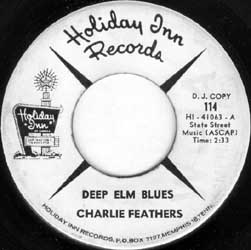
Charlie Feathers is one of those unsung heroes of rockabilly, an artist who never received due commercial recognition but in later life has attained the respect he deserves. Charlie was one of the early rockabilly pioneers, he spent some time at Sun records first as a studio musician and later released a couple of singles on Sun and subsidiary labels like Flip and Holiday Inn. Feathers had a very distinct theatrical voice, there would be snippets of falsetto or a hiccup style vocal delivery present in his songs. He was probably more known for his work on the King record label, with the classic Can't Hardly Stand It appearing on that label.
The last single he recorded for Sam Phillips was in late 1962 for his newly formed Holiday Inn label, Deep Elm Blues was a mid tempo soulful number with a funky twisting organ driving the record. Feathers sounds a little like Ronnie Hawkins on this one, a real vocal workout where he gets down and dirty but will also change the pitch of his voice and add in hiccups that add a different dynamic to the song. Like most 45's that came out of Memphis it's got a solid pumping groove, the bass keeps things anchored but has a nice drifting sound to it. I would love to know who is playing organ on the song, maybe Bobby Emmons possibly someone from the fledgling Hi studio.
The B side Nobody's Darlin But Mine, has a really funky countrified rhythm. I'm assuming it's Charlie on acoustic guitar but he lays down this guitar pattern that just flows and snakes its way through the track. Even though the guitar track is taken at a pulsating tempo the drums seem to be suspended in time pulling the song back in a way that you didn't hear a lot from that period. Charlie in pleading for his girl to be faithful delivers a suitably anxious delivery full of wails and exaltation's as the driving rhythm adds to the feeling of despair. It's another one of those songs that's hard to categorise, it's not a rockabilly tune it has more of a funky country feel to it. When rockabilly faded from view artists like Charlie Feathers looked for a new sound, one that still retained the roots of rock and roll but added a new dimension.
Larry Williams emerged from the gigantic shadow of Little Richard, the career of both artists often intertwined over the ensuing years. Both recorded for the Specialty and Okeh record labels and Williams produced two album for Richard during the mid 60's as well as serving as his musical director during this period. When Little Richard departed the secular music world in 1957, Williams was groomed as his successor, he may not have had the same flamboyant demeanour or piercing voice but he recorded a number of classic R&B singles from 1957 to 1960 before a three year jail stint robbed him of his momentum.
Bony Moronie is one of those classic New Orleans R&B songs, a great Earl Palmer backbeat that serves as the foundation for a pulsating rhythm, there is a great honking sax interval and an insistent repetitive groove built around the sax and piano. New Orleans was unique for it's R&B scene, it had a backbeat all of it's own that couldn't really be copied, it seemed that it was rooted in New Orleans and couldn't be transplanted anywhere else. Bony Moronie was Williams' second single to crack the U.S Top 20 in 1957 and would eventually sell a million copies, his second release on Specialty Short Fat Fannie was also a million seller and would become an R&B standard. The B side of Bony Moronie, You Bug Me Baby also charted it sounds like a straight ahead rocker but it has a similar start to Rockin Robin then it slips into a latin styled groove.
After his release from prison Williams continued his recording career, he also toured the U.K in 1963 with Johnny Guitar Watson with whom he recorded to classic soul albums for Okeh in 1966 and 1967. Those recordings didn't make a lot of headway when they were released but they are now regarded as classics. Williams continued to be dogged by drug problems into the 1970's and died in 1980 in what was ruled a suicide.
This 45 was probably the last great single to be released on the Sun label, it was issued in 1966 and featured the frantic vocals of legendary session musician Jim Dickinson. The Jesters were a Memphis based rock group that featured Sam Phillips' son Jerry on rhythm guitar, the groups only Sun 45 was produced by Sam's son Knox. The A side Cadillac Man is a proto garage soul styled shouter, a real solid r&b rhythm in place and some throat shredding vocals from Jim Dickinson. Strangely enough Dickinson wasn't even an official member of the group, their lead singer had left the group just prior to them entering the studio. He was already an established session musician in Memphis at that point and would go on to become part of Atlantic Records' session group the Dixie Flyers, playing with Aretha Franklin, James Carr and Albert Collins. Cadillac Man has some of those funky chop chop piano chords, Dickinson takes full rein in the middle with some pounding solo work rock and soul Jerry Lee if ever there was one.
My Babe the classic Little Walter gem has been covered countless times and appeared to become a staple song for any R&B act in the late 50's early 60's. The song is given a different treatment, it has a Hi Heel Sneakers rhythm which was prominent at the time, it gives the song real impetus and funk. There were so many southern bands recording some amazing r&b records during the mid to late 60's. Where Dickinson's piano was the centrepiece of Cadillac Man the B-side features a great guitar solo, wailing, piercing Hubert Sumlin inspired notes dominate the middle eight. The B side probably had more commercial potential and has a more polished cohesive sound.
Gene Summers is one of those artists you sort of stumble across by accident, on a destination to another musical point you discover something else along the way. He has a really interesting catalogue of 45's that were released on small labels from 1958 into the late 60's, and they cover the gamut from rockabilly to R&B. It follows a lineage many rockabilly artists took when the rockabilly fad died out, they either took the country path or the more urban path of rhythm and blues. Some of those artists crossed both divides and in doing so created an amazing body of work.
Gene Summers was born in Dallas Texas in 1939, Texas is a place that doesn't get it's due when it comes to music, because anything that came out of Texas had a unique style. A bit like Louisiana, Texas music had a few extra ingredients, there was the ever present influence of Mexican music, in terms of blues they pioneered a very strong down at home bare to the bone style of playing. Bob Willis revolutionised music with his version western swing that mixed country and jazz. So when you listen to Summers' early rockabilly records you are struck by how primitive and raw they sound, there are all the elements of rock and roll but they have an intensity that is different from the rockabilly records recorded in Memphis and Arkansas. His first release was the brutal School of Rock and Roll which was released on the Jan label in March 1958. It has a pounding piano sound that dominates the record but also a brooding rumbling rhythm section that propels the record, the middle of the song has some jungle drums which became familiar to me on some of Buddy Holly's records.
Going under the name Gene Summers and the Rebels he recorded the song nervous which was released in July of 1958, this song has a real bluesy feel to it, it sounds more polished with some nice doo-wop style backing vocals. Twixteen was recorded in Dallas the same year and sees a return to the rockabilly sound of his first record, it's one of those great rock and roll records that focuses on the drama's of adolesence. For some reason Gene didn't release another record for three years, in 1962 he started releasing records on a variety of labels, Almost Twelve O'Clock came out on the Texas based Lafayette label. There is a definite shift in his musical style, the song has a distinct R&B feel and sounds like an uptempo version of Bobby Day's Over and Over.
The following year he released a cover of the Red Perkins song Big Blue Diamonds which was first released as a 78RPM single on King Records in 1950. Summers' version has a more pop styling but it has a distinctive organ melody which gives it more of a soul feel, the single was initially released on two small Texas labels before being picked up by the Jamie label out of Philadelphia, a label that was home to the great Duane Eddy. The follow up Alabama Shake was issued on the Capri label, this is a more uptempo beat styled number with some nice triplet style piano, the guitar solo features some funky Chuck Berry style licks. The B side Just Because is a slower more bluesy ballad with a nice sax interlude. Being 1964 it would have been hard for this type of 45 to break out of the local region. Gene summers continues to record and tour and lot of his material has been reissued on the collectibles label and the brilliant ACE.
Warren Smith is one of those artists that almost has a split personality when it comes to his recording career. Many remember him has the raucous rockabilly artist who recorded the classic Ubangi Stomp for Sun Records in 1956, if you want to hear classic rock and roll then you can't go past this cracking gem. Others remember him as the country artist who cut some great records for Liberty during the early 60's. Smith hailed form Humphrey's County Mississippi and grew up with his grandparents in Louise Mississippi, after completing service in the U.S airforce he moved to West Memphis Arkansas and began performing at the Cotton Club which was a hotbed for the development of rockabilly music. He was performing with the house band The Snearley Ranch boys which included Stan Kessler who became an engineer at American studios in the late 60's. It was Kessler who introduced Smith to Sam Phillips at Sun Records, he recorded a number of singles for the label until the end of 1958. The following year he relocated to California at the suggestion of his good friend Johnny Cash, Cash offered Smith a spot in his touring band but Smith chose to continue his own career.
Smith signed with Liberty Records and immediately hit the country charts with I Don't Believe I'll Fall In Love Today which reached #5. He continued to hit the country charts during the early 60's but by 1964 his career was beginning to wane. Big City Ways tells the tale of a country girl who changes when she moves to the city, she becomes cold and distant, captured by the alluring charms of the big city. Smith has a great voice, like the great country singers of that period he displays real control and conveys the deep meaning of the song. Like a good country song he conveys that sense of sorrow that marks a good country record. His also ably assisted by some great musicians including the great pedal steel player Ralph Mooney.
They taught her big city ways Big city talk, big city living Big city walk They took the sweetest girl and made her cold and hard They took the sweetness from my baby's heart
Smith was produced by the great Joe Allison who had a storied career in country music, he wrote the classic Jim Reeves song He'll Have To Go. In 1959 he was hired by Liberty Records to create a country roster for the label, during that period he also signed Willie Nelson to the label. Big city Ways reached #41 on the C&W charts in 1964 it was his second last charting single. Smith was involved in a serious car accident in La Grange Texas in 1965, by the time he recovered his career with Liberty was over. He suffered drug and alcohol problems but made a comeback in the late 70's as part of the rockabilly revival, he passed away in 1979.
Carl McVoy was the younger cousin of Jerry Lewis, he cut some sides for Sun Records during 1957 and 1958 most of which went unreleased. Not much information about Carl McVoy to be found, he grew up in Pine Bluff Arkansas and was deeply influenced by boogie woogie piano, some of which he showed his cousin. McVoy release his first record Tootsie for the fledgling Hi record label towards the end of 1957, according to some liner notes I found McVoy had a share in the label. He was probably best known for being a member of the Bill black Combo which he joined in 1961 although according to the liner notes from a Bill Black best of McVoy did not play with the band on the road, that role was filled by up and comers Bobby Emmons and Bobby Wood. Both of those gentleman would go on to become an integral part of American Studio's in the mid to late 60's.
In 1962 McVoy released the single What Am I Living for b/w It's a Crime, the A side was a cover of the Chuck Willis R&B chestnut originally released in 1958 on the Atlantic label. It was then covered by Conway Twitty in 1960, the contrast between Twitty's version and McEvoy's in interesting because it highlights the differences between small independent labels and a major label. Musically McVoy's version sticks closely to the original and McVoy does a solid interpretation although he lacked the power in his voice to really give the song the dramatic edge it required. It's quite possible that some of the musicians who later formed the bedrock of American studios played on the record, Tommy Cogbill and Chips Moman were both hanging around at Hi at the time, it's also possible that Reggie Young was present on guitar having just returned from a tour of duty in Ethiopia.
On the other side you have Conway Twitty's version which was recorded and released on the MGM label in 1960 and cracked the U.S top 20. Conway's version is suitably beefed up and given the Nashville treatment by his producer Jim Viennau. Conway gives one of the most soulful renditions of the song you will hear but the song has the most ghastly string arrangement you will hear. It would have been much better with either a horn arrangement or just a basic rhythm track, the song has some nice rinky rink style piano floating underneath.
Carl McVoy didn't release another 45 on the Hi label, he stayed with the Bill Black combo until the mid 60's before going into the construction industry.
Travis Wammack is one of those names, you think you've seen it somewhere but you can't quite place it. Wammack was a session guitarist and later enjoyed some solo success in the early 70's recording at FAME studios and releasing albums on Phil Walden's Capricorn label.
Travis Wammack hailed form Walnut Mississippi he recorded is first song at 11 for the Fernwood label, in his teens he was working regularly as a session musician for Roland Jane's Sonic studios in Memphis. This studio was an early pre-cursor to Chips Moman American which started in the mid 1960's, a lot of the musicians who went to work for Chips got their start cutting sessions with Roland Janes. One of Roland Jane's productions was Matt Lucas who I have reviewed on this blog, Wammack played guitar on some of his 45 releases including his cover of Bobby Bland's Turn on Your Lovelight.
He would later work at Rick Hall's FAME studios playing on seesions for Clarence Carter, Aretha Franklin and Wilson Pickett. In the early 70's he had two chart records, Evil Ways and (Shu Du Pa Poo Poop) Love Being Your Fool which cracked the U.S Top 40. One of his most enduring records is Scratchy which was released on the ARA label in 1964 and reached #80 on the billboard chart. It's a proto garage surf instrumental but in a very twisted and distorted way, with some clean picking from Wammack. Whilst it has a surf styled beat it has some very bluesy guitar riffs, then in the middle the song cuts out and some crazy noise emits, it was some sort of monologue played backwards. The song is very sparse, the bass is way back in the mix looking at the song credits the name Chrisman pops up which I'm assuming would be drummer Gene Chrisman, that would explain the crisp drumming on the record.. It has a nice bluesy ending with some scorching guitar.
I recently reviewed an album by King Curtis and I was thinking about other tenor sax players who had their own distinctive sound and so I was drawn to Ace Cannon. Cannon hailed from Grenada Mississippi and had come to attention as a member of Bill Black's Combo. He had recorded as a solo for the Hi label and in 1961 he cracked the U.S Top 20 with the single Tuff.
He recorded and interesting version of the folk song Cottonfields in 1963, it starts off almost like a gospel tune with the choir singing about those old Cottonfields back home before Ace rather incongruously barges in with some rapid fire tenor honking. I'm not sure who is backing Ace but I assume it's the Hi rhythm section which at that point was pretty much the musicians who played in Bill Black's combo. It's possible that Reggie Young was playing guitar, maybe Mike Leech on the bass, Carl McEvoy on the piano. From what I could gather the song was arranged by Jerry Arnold, another luminary from the Bill Black combo. Hi in the early 60's was mostly a label for instrumentals it wasn't until the late 60's when Willie Mitchell took control of the label that the famous Hi records sound came to prominence.
Cottonfields was written by the great Leadbelly who recorded it in 1940, it was later covered by Odetta in 1954. It became a prominent song in the folk revival of the early 60's, the Highwaymen released a version of it and it reached #13 in 1961. Established country artists like Buck Owens and Ferlin Husky also recorded the song in the early 60's. Owens gives it the real Bakersfield treatment with some nice fiddle and a real weary lonesome vocal.
There are many unknown heroes in the history of rockabilly music, artists who never gained the commercial success that they deserved, artists like Charlie Feathers and Billy Lee Riley come to mind. Sonny Burgess is also on that list, a formidable rocker who hailed from Newport Arkansas he recorded some firebrand records for Sun records in the mid to late 50's. His sound was loose and ragged but it was set apart by the sheer unrelenting force of Sonny's vocals and the canny use of trumpet in some of his early recordings which gave the songs a New Orleans jazz feel to it.
Sonny had been playing in clubs in and around Newport since the early 50's, he regularly performed at the famous Silver Moon Club and other clubs on the Arkansas, Oklahoma, Texas circuit. Sonny and his band the Pacers had made the trip to Memphis in 1955 and auditioned for Sam Phillips who signed them to his label, the following year they cut their debut single We Wanna Boogie which had Red Headed Woman as the B side. It's a great 45, certainly one of the most frantic rockabilly records to come out of Sun at the time. We Wanna Boogie sounds like party time, Sonny is in full flight whooping and hollering as the song takes off. What gives it a distinctive flavour is the trumpet which gives it an almost jazz feel, it's quite a mix. Sam Phillips was a unique producer in that he was able to capture on disc the raw nature of the band, he didn't try to dilute their sound. Red Headed Woman is another powerful rocker with that same muted trumpet sound that transforms the record, it also has some pounding keys work from Kern Kennedy. Sonny on guitar gives a romping distorted guitar solo, it sounds like his speakers are about to explode
When released the record sold well in the south and midwest, the band were a popular live drawcard, however Sun struggled beyond it's established distribution network. The record sold around 90,000 copies but Phillips was unable to help break the record further afield. The story goes that Burgess later found out some years later that the single was a number one hit in Boston but he was never made aware. Burgess continued to record for Sun until 1960, he later joined Conway Twitty's backing band for a time before retiring from full time performing. He returned to the music scene in the late 70's and has continued to record and perform.
Matt Lucas released a handful of really interesting 45's during the early 60's, he was another artist who was part of the bridge from rockabilly to a more R&B or rock and soul style of music. Matt was a drummer who played in a similar vein to Levon Helm, very crisp but with feeling and enough looseness to get people up on their feet. I've previously reviewed his version of the Hank Snow classic I'm Movin On which cracked the Hot 100 in 1963, he released a few more singles for Smash but none were able to capture the success of Movin On. Like Ronnie Hawkins, Lucas found popularity in Canada and accepted an invitation from promoter Harold Kudlets to work in Canada. There was a vibrant club scene up north and Kudlets was the biggest promoter in Canada, he was given the nickname the colonel by Hawkins who deemed that if Elvis could have a colonel for a manager then so could he!
In 1965 Lucas was invited by producer Ollie McLaughlin to cut a record for his Karen label. McLaughlin had found success as a manager for Del Shannon and vocal group The Capitols The M C Twine was recorded at Detroit's United studios with some of the Motown players backing him. The song has a distinct soul flavour and would have been popular on the northern soul circuit. Lucas kept the party theme from his previous records and it sounds like everyone is having a ball in the studio. The song was a regional hit across Detroit and probably found it's way into the CHUM chart in Canada but the record soon became a prized rarity. Lucas cut another record for Karen but soon left the music business for a time. It's another interesting record that adds another piece to the jigsaw, a rockabilly artist who went on to record in a more blue-eyed soul manner. It's also interesting that his guitar player Narvel Felts cut more r&b material in the early to mid 60's, I would have like to have heard Narvel cut a country soul record like Charlie Rich. It's a shame but I'd love to find more of the material Charlie cut at Hi studios in the mid to late 60's, the songs I have heard are stunning.
Continuing on with my fascination with early 60's rockabilly I happened across this 45 when I was reading about another legendary name in rockabilly, Narvel Felts. Matt Lucas was Felt's drummer but he had already built a solid reputation as a musician dating back to the mid 50's. Matt Lucas was born in Memphis but grew up in Popular Bluff, Missouri, as a teen he was deeply influenced by rhythm and blues and jazz music and had spent some time playing the blues clubs in St Louis including the Bamboo Key Club where Ike Turner had the house band and further afield into Chicago. In 1956 he met Narvel Felts whilst playing at a club in Gideon Missouri and was soon playing in Felts' trio The Rockets. The trio played the traditional southern circuit of honky tonks and gut bucket clubs through Arkansas, Missouri, probably parts of Louisiana and further north. These were tough clubs, places like the Silver Moon in Newport, The Delta Supper Club in West Helena and The Starlight in Lepanto, these places were breeding grounds where rockabilly underwent a transformation, and came out the other side with a harder more rocking R&B edge. Matt Lucas had been encouraged to sing a few of the harder edged R&B songs at these gigs. Ronnie Hawkins would often do the same at his gigs during this period, often letting Levon Helm or Richard Manuel sing more R&B influenced tunes.
In 1961 Felts went into the army for six months, Matt Lucas hung around Memphis playing sessions and working with other bands. He cut a one off 45 at the Fernwood studio with local producer Roland Janes who had a prominent role in the local music industry in Memphis in the early 60's. The following year Lucas was back working with Felts and it was at the end of a Felts session that Lucas recorded a cover of the Hank Snow classic I'm Movin On. Lucas grabbed hold of the song and transformed it into a classic R&B song with a hard southern edge. Lucas gives the song a primal feeling, as he leers, shouts and screams "shake it for your daddy" Lucas provides a sharp beat to the song, prominent on the ride cymbal and with little fanfare in the way of solos. I'm assuming that Narvel is playing guitar and he provides a nice chicken scratch interplay with Lucas' wails. The record was released in early 1963 on Janes' own Renay label, it soon became a local hit, it was given airplay by John (JR) Richbourg on his WLAC radio show. The record was soon picked up for national distribution by the Mercury subsidiary Smash records and by May 1963 it reached #56 on the U.S chart, it was also a big hit in Canada and in parts of Europe. That single was released in a significant year, Ronnie Hawkins recorded his classic Who do You Love/Bo Diddley single around the same time and Conway Twitty released his classic R&B 63 album that year. Narvel Felts also cut some interesting records during that same period.
The B side My Heavenly Angel had a pronounced doo wop feel and would have benefited from some vocal backing. Lucas had spent some time in L.A in his teens and had been greatly influenced by the doo wop sounds of groups like The Crows and singers like Clyde McPhatter. Matt Lucas was never able to repeat the success of I'm Movin On but continued to cut some good records which I'll feature in further blogs. He continues to perform and a few years ago recorded a song called I'm Still Movin On!
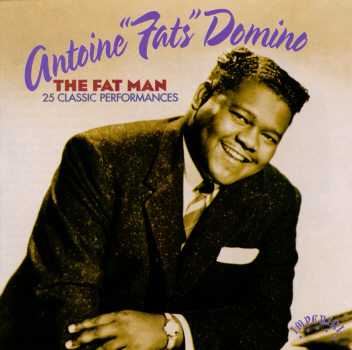
Last week the legendary Fats Domino celebrated his 85th birthday, his musical legacy is immense and his importance to the development of rock and roll cannot be underestimated. His music traversed the varieties of New Orleans music and added in touches of R&B and country music.
There is always a debate over who made the first rock and roll record, rock and roll is a sound that developed and mutated over a fairly lengthy period. It was constantly refined and added to, each city had it's own distinct rhythm and bands passing through might hear something from a local band and add it to their sound. There are a lot of records that came out in the late 40's and early 50's that point to a change, something new is happening and one of the records that signified that change was Fats Domino's The Fat Man. It was his first single and originally came out as a B Side to Detroit City Blues, it was recorded in December 1949 in New Orleans at Cosimo Matassa's J&M studio. It was released on Lew Chudd's Imperial label, Chudd had asked A&R legend Dave Bartholomew to recommend some local New Orleans talent for his label, and Fats Domino was signed after Chudd had seen him perform in a club.
The Fat Man is a variation of the New Orleans tune Junker Blues, it's a style that can also be heard on Lloyd Price's Lawdy Miss Clawdy. The song has a distinctive backbeat which was provided by the legendary drummer Earl Palmer, it also displays Domino's rolling piano style. It was a style that Domino would refine and capitalise on from 1955 until 1962 when he began to fade from the charts. The New Orleans sound has a unique place in rock and roll, it added a pervasive beat and horn arrangements that weren't normally featured in other R&B and early rock and roll records. The beat was not straight out 4/4 it had syncopations and twists and variations that other rock and roll records didn't have.
They call, they call me the fat man Cause I weigh 200 pounds All the girls they love me Cause I know my way around
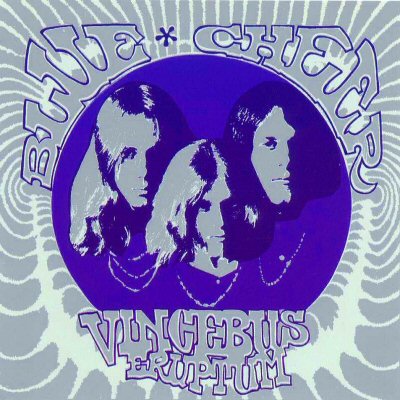
Although their initial brush with success was fleeting Blue Cheer were a landmark band, incredibly influential in the development of heavy metal and later regarded as pioneers of stoner rock. Their debut album Vincebus Eruptum released in 1968 was a piledriving tour de force, a brutal mixture of blues and psychedelic rock. It was certainly one of the most powerful albums to come out that year, it was crashing wave of distorted guitar, pounding drums and anchored to the floor bass. The band were formed in 1967 in San Francisco and had a fairly fluid line-up, their classic three piece line-up consisted of Dickie Peterson on bass/vocals, guitarist Leigh Stephens and drummer Paul Whaley. Vincebus Eruptum was recorded in 1967 at Amigo studios in North Hollywood and reached #11 on the U.S album chart in January 1968, Summertime Blues reached #14 on the Billboard singles chart.
My introduction to the group came as a curious 10 year old, I happened to see a cassette tape called Roots of Heavy Metal in a local record store and I got my parents to purchase it. Summertime Blues which was their cover of the Eddie Cochran classic was unlike anything I had heard before. I played the song on a portable cassette player, I thought there must have been something wrong with the speakers, the bass was so distorted and crackling and the drums were thunderous, it sounded like it was recorded in a cave. You get an indication from the start that this isn't a typical cover, the band take hold of the song and take it to another dimension. They come crashing in like they are kicking down a door, Paul Whaley flailing on the cymbals and then giving serious assault to the floor tom. Then the band collide together, Peterson has a walking bass that is propulsive, distorted and loud. In his vocals Peterson gives the song a darker, violent feel, to match the period, it's almost anarchic in it's delivery. Where Eddie Cochran came from a place of humour and teenage frustration, Blue Cheer took to the song to a place of hostility and confrontation. America in 1968 was not a land of piece and harmony, it was violent and unsettled and it started to resonate in the music. A lot of bands were using blues music as the setting to voice their anger, it took on a dark hue but at the same time it had an exhilarating effect.
If you listen to the rest of the album you hear that sense of anger and almost a sense of tired resignation, Doctor Doctor has some brilliant drumming on it, it was written by Peterson as an anthem to drug use. They also give an intense sonic exploration on Mose Allison's Parchment Farm, Stephens guitar lines are screeching psychedelia at it's best, heavy and flowing. In this album you hear the genesis of heavy rock and also stoner rock, Vincebus Eruptum is a heavy beast indeed.
Arkansas was the heartland of rockabilly, it was a state that produced the likes of Ronnie Hawkins, Mack Self, Conway Twitty, the list goes on. It's music history is fascinating, not only did it have one of the hottest live music circuits going around there were a number of small labels located in the state, such as Razorback Records. Rockabilly began to fade as a popular style in the late 50's but some of those early pioneers continued to record, some transitioned to a more country style, others added a harder rhythm and blues edge, it makes for fascinating listening.
One such artist was Marianna, Arkansas native Jimmy Evans who was known more as a session player, he had played at Sun with Jerry Lee Lewis, he had been on the road with Conway Twitty, Billy Lee Riley and the great Ronnie Hawkins. He plays on some of the Hawk's early rockabilly classics like Mary Lou and Forty Days. After leaving the Hawks in 1960 Jimmy returned south and cut records for a lot of local labels, Sun, Rebel Ace and Erwin. In 1962 he recorded The Joint's Really Jumpin, which is a classic barnstorming rocker, very much in the mould of Jerry Lee Lewis. It has that similar piano pounding sound pioneered by the Louisiana legend, it starts off sounding a little like Danny and The Junior's At The Hop. The song was issued on the Caveman Record label which was located in Wolf Lake Illinois according to the sleeve. Not sure where the record was recorded my guess would be at Sun studios possibly with the legendary Jimmy Ray Paulman on guitar, another Hawkins alumni.
The American music industry post World War II saw a significant rise in the number of independent record labels, most of the entreprenuers behind these labels saw a demand for certain styles of music that wasn't being met by the major labels so with small budgets and limited technology they recorded local artists in their regions and by doing so helped shape the American musical landscape.
Sam Phillips' Sun Records was a pioneer in this attitude, Sam Phillips saw the capabilities of mixing rhythm & blues with country/hillbilly music and in doing so he created one of the most influential independent record labels, one that became the template for others to follow. A lot of the small record labels in the deep south were constantly on the look for something new, something that sounded different, there seemed to be both an open door policy and an open ear one. Frank Frost was a bluesman from Auvergne Arkansas, he began his career as a guitarist in St Louis before returning to Arkansas to work with the legendary Robert Nighthawk. He also spent some years touring with Sonny Boy Williamson and it was Williamson who taught him to play the harp. By 1960 he was playing around the Mississippi Delta with Big Jack Johnson and drummer Sam Carr, it was during this period that he attracted the interest of Sam Phillips. Phillips brought him into the studio in 1962 to record some material that was released on the subsidiary label Phillips International. From those sessions came the single Hey Boss Man which is a cover of the Jimmy Reed classic Big Boss Man, Frost version has a more downhome feel. Think along the lines of the type of records J.D Miller was recording at his studio in Crowley Louisiana, a very sparse feel not a lot of bottom to the songs. Frost sounds like Miller's protege Slim Harpo, Frost blasts some nice harmonica against a solid bacbeat courtesy of Sam Carr. The fretwork is supplied by Jack Johnson who has a nice melodic flow to his playing, Johnson had also cut his teeth working with Robert Nighthawk.
Frost and The Nighthawks would continue to record, cutting some tracks for the Jewel record label which included the minor R&B hit My Back Scratcher which was produced by legendary guitarist Scotty Moore. In the late 70's the trio would become The Jelly Roll Kings, in 1997 they recorded the album Off Yonder Wall whih was produced by renowned writer Robert Palmer. Frank Frost passed away in Helena Arkansas in 1999.
The Rolling Stones were the quintessential bad boys of rock and roll, they were the first to rile the establishment, they refused to bend to the system and forged an independence few in the business could rival. They didn't like the regimented style of British recording studios and producers and so they went to the states and cut records at their beloved Chess Studios in Chicago. Some of it was enhanced by their image conscious producer/manager Andrew Loog Oldham but it remained their core ideal that they wouldn't bend for anybody, it was us against them.
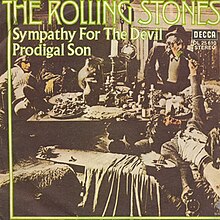
In their music they went places few went, they talked about not getting any sex, they sang about housewives popping pills, their songs had a nastiness to them. The year 1968 was tumultuous year for the world and especially in the U.S, the assassination of Dr Martin Luther King, the ensuing riots across the country and the deepening resentment of the Vietnam War created a divided nation. A new generation began to ask why, they began to mobilise and they began to voice their frustration, America had become a tinderbox and the sparks were flying. Who better to express that negativity, to give it a musical voice than the Stones, they weren't afraid to confront the times and expose the darkness. Sympathy for The Devil whilst not directly confronting the situation in the manner of Street Fighting Man it brought to bear the dark clouds hanging over America. It also drew on dark chapters of human history with the devil's bloodstained hands pulling the strings.
The song starts with an ominous squeal from Jagger as bongos and maraca's build a maddening rhythm, then there is that piano chord by Nicky Hopkins that opens the gates to hell, Jagger swaggers in,
Please allow me to introduce myself, I'm a man of wealth and taste, I've been around for a long long year, Stole many a man's soul and fate.
The devil talks of seeing pain and doubt in Jesus as he watched as Pilate sealed his fate,
Pleased to meet you, hoped you guessed me name, But what's troubling you, is the nature of my game
The momentum of the song begins to build, Keith Richards in an unusual role supplies a supple bass line with real rhythmic pulse. Jagger begins to build on the foundations of the foul deeds of the devil,
I stuck around St Petersburg When I saw it was time for a change, Killed the Czar and his ministers, Anastasia screamed in vain, I rode a tank, Held a General's rank While the blitzkreig rained And the bodies stank
Keith Richards steps in as the percussive flow builds to a climactic frenzy, sending out stinging guitar line and a nice repetitive wail. Jagger then brings the song back to a modern context seemingly calling for restraint from those who have and abuse power.
Just as every cop is a criminal, And all the sinners saints, As heads is tails just call me Lucifer As I'm in need of some restraint So if you meet me, have some courtesy Have some sympathy and some taste Use all your well learned politics Or I'll lay your soul to waste.
Sympathy for the Devil was never released as a single other than in France and later in Germany I believe, it was released on the Beggars Banquet album which came out at the end of 1968, after a six month delay due to Decca raising concerns over the cover art. The album itself signalled a return to form for the Stones after twelve months of arrests and the release of the panned At Their Satanic Majesties Request album. They would keep that creative head of steam going with the follow up Let It Bleed.
The Animals were part of the British R&B movement that emerged out of England in the early 1960's, hailing from Newcastle with a decidedly dirty sound that had a strong sense of swing. They had a great vocalist in Eric Burdon who could belt out a blues song as good as anybody, to me he was the best R&B singer to come out of the U.K during that period. They were also a lesson in what could happen if you didn't have a grasp of the music industry, despite selling millions of records the band were broke by the time they wound up in 1968. Constant touring also added to the pressure, keyboard player Alan Price departed the band in 1965 due to his fear of flying which made it difficult for the band to tour the U.S. In 1966 the band began to fragment but not before they cut one final single before there were significant line up changes.
Don't Bring Me Down was released in May 1966, The Animals were never prolific songwriters themselves although Eric Burdon and Alan Price did compose quite a few songs for the group, not many were released as singles. Initially the band focused on covers of R&B songs, it seems their producer Mikie Most wanted them to record more pop oriented material which the band weren't keen on doing. Don't Bring Me Down was from the Goffin-King catalogue although it's given a distinct treatment from the Animals. In the U.S they had signed with MGM and found a more sympathetic producer in Tom Wilson who gave them more artistic freedom. It's also a song that featured possible the best performance Dave Rowberry ever committed to record, he gives the song a pulsating organ intro before Hilton Valentine adds a distorted fuzz guitar. Barry Jenkins who had just joined the band provides a more crisp solid rock and roll beat than did his jazz oriented predecessor John Steel. Chas Chandler was a bass player I always liked, he had busy hands and played more as a rhythm player but he always set a solid grounding for the rhythm section.
Burdon gives a great performance, pleading for understanding from his partner, When you complaint and criticise, I feel like I'm nothing in your eyes It makes me feel like giving up Because my best ain't good enough
It's a song that has some similarities with the Yardbird's Shapes Of Things, not the tempo but the guitar distortion is present on both songs and was perhaps a harbinger of what would happen the following year with psychedelic music gaining a foothold in music culture. In some ways this was the last great song The Animals would record although San Francisco Nights is a great song, I don't think Burdon's voice was necessarily suited to more drawn out styles of music, he was a soul belter. The two groups share similarities in that they were poorly managed and were basically ripped off blind, both had Mickie Most as a producer who was unsympathetic to their creative desires and pretty much forced them to record crap. Alan Price went on to have a successful solo career and Chas Chandler managed Jimi Hendrix and in the 1970's Slade. Jimmy Page who joined The Yardbirds in 1966 went on to found Led Zeppelin and Jeff Beck has enjoyed a very successful solo career after leaving the band at the end of 1966.
British R&B seems to be on the menu for me at the moment, and one of the great protagonists of that sound and a band who were seriously underrated were The Pretty Things. It's also relevant as they are currently in Australia touring and the shows have garnered critical acclaim, they also have performed in New Zealand their first concerts there since being banned from the country in 1965. Their genesis was closely linked with that of The Rolling Stones, guitarist Dick Taylor had played with Keith Richards and Mick Jagger in Little
Boy Blue and the Blue Boys in 1962 before joining the Stones in early 1963 but he left after a few months. Taylor then met singer/harmonica player Phil May at the London Central School of Art and they formed the Pretty Things. Throughout their history they had a fairly fluid line-up but the most significant line-up included Brian Pendleton on rhythm guitar, John Stax on bass and Viv Prince on drums.
Don't Bring Me Down was their second single release of 1964 and reached #10 in the U.K giving them their biggest hit single. It also reached #34 in Canada and was a minor hit in Australia, where the band toured the following year. It's another defining document of the early days of the British R&B scene and an influence in the garage sound that emerged in the U.S the following year. The song has a sharp Bo Diddley influence with heavy percussive sounds and stop times in the verses before the band winds up in the chorus. Prince's drums especially his snare sounds like it's been baked in an oven it's that tight. The Pretty Things were never able to commercially capitalise on this early success, the following year on an Australasian tour Viv Prince set fire to a bag of crayfish on an internal flight in New Zealand which led to the band being banned from the country.
In 1968 they recorded the revered S.F Sorrow concert album which has been acknowledged as the first rock opera, pre-dating The Who's Tommy by about 6 months. It's commercial failure led to Dick Taylor leaving the band in 1969, the band briefly splintered before re-uniting. In 1974 they came under the management of Peter Grant and were signed to Led Zeppelins label Swan Song and their two releases on that label Silk Torpedo and Savage Eye both reached the U.S charts. The current line-up touring Australia has both Phil May and Dick Taylor with a young rhythm section, unfortunately I didn't get the chance to see them play.